Generative AI demos are easy to like. A chatbot answers questions fluently, a copilot drafts an email in seconds, an AI agent books a meeting on its own. The harder question for Philippine business leaders is what happens next: how do these tools become reliable parts of everyday work, inside real systems, with real customers and real accountability?
The gap between a GenAI demo and a GenAI workflow
A demo shows what a model can do on a good day. A workflow has to perform on every day. That means handling unusual requests, connecting to enterprise systems, respecting permissions, staying within policy and knowing when to hand over to a person. Most of the work in enterprise GenAI is not the model itself. It is everything around it: integration, data access, evaluation, monitoring and change management.
Why this matters especially in the Philippines
The Philippines has one of the world's largest service economies, with a major IT-BPM sector, global capability centres and contact-centre operations alongside large banking, telecommunications and retail customer bases. These are exactly the environments where GenAI and AI agents can change how work gets done: summarising interactions, assisting agents in real time, drafting responses, processing documents and automating routine back-office steps.
It also means the stakes are high. Workflows here touch large customer volumes and, often, personal data. Getting human oversight, quality control and workforce adoption right is as important as the technology itself.
Copilots, assistants and agents: knowing the difference
Copilots and assistants support a person who stays in control, for example drafting, summarising or suggesting the next best action.
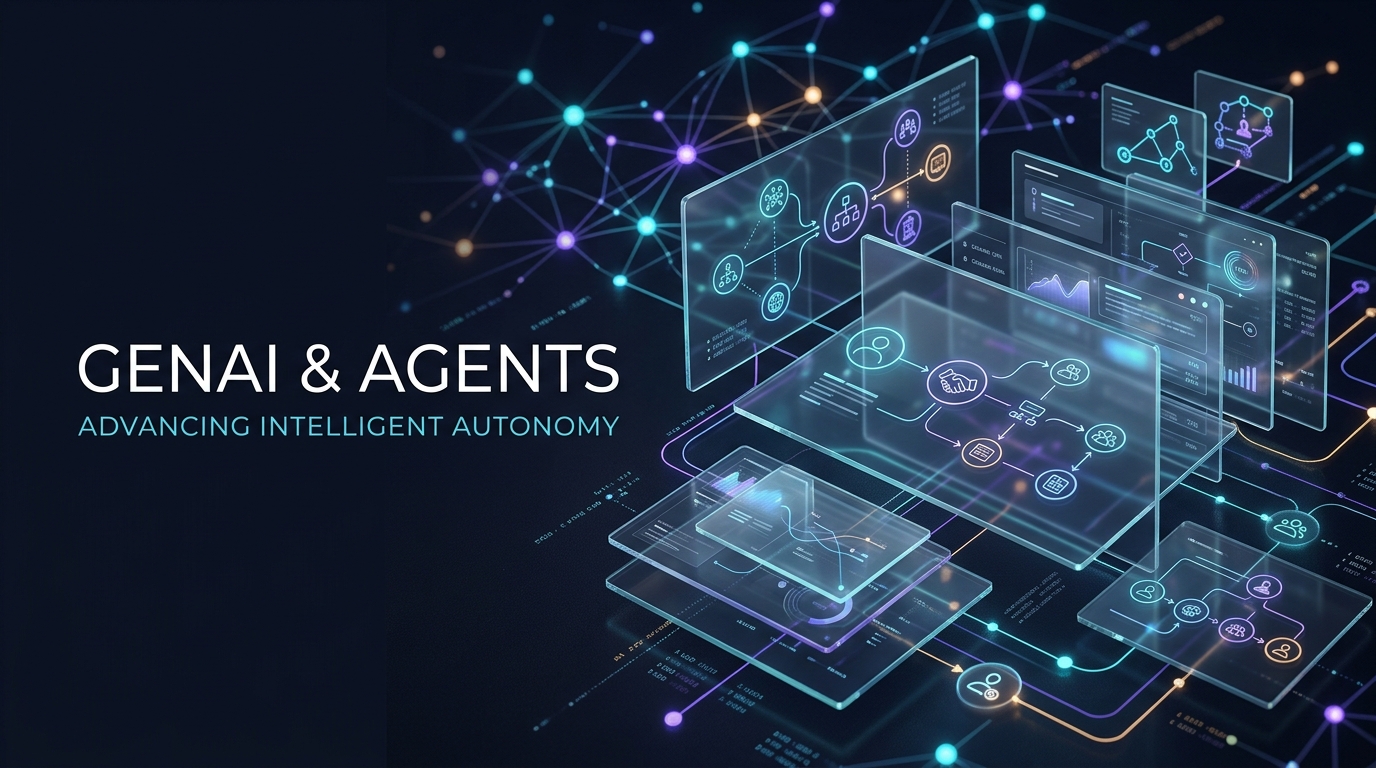
AI agents can plan and carry out multi-step tasks, often using tools and systems on a user's behalf, with varying levels of autonomy.
Agentic workflows combine several agents, systems and human checkpoints into an end-to-end business process.
The more autonomy an AI system has, the more important permissions, guardrails, evaluation and human review become.
Five principles for putting GenAI and agents into production
1. Start with high-volume, well-understood work
Good starting points are tasks that are frequent, repeatable and easy to measure: knowledge search, case summarisation, document processing, internal service desks and agent assist in contact centres.
2. Ground models in enterprise knowledge
Connecting models to trusted internal sources, often through retrieval-augmented generation (RAG), improves accuracy and keeps answers aligned with company policy and current information.
3. Evaluate before and after go-live
Define what "good" looks like, test against real examples and keep monitoring quality once the system is live. Evaluation is ongoing, not a one-time check.
4. Design human oversight in from the start
Decide where a person must approve, review or be able to override an AI action. Clear escalation paths protect customers and build trust with employees.
5. Choose models for the job, not the headline
Model selection should weigh accuracy, cost, latency, language needs (including English, Filipino and Taglish interactions), data handling and vendor terms. Larger is not always better.
The workforce side of GenAI
GenAI changes roles more often than it replaces them. Organisations that scale successfully invest in training, redesign workflows with frontline teams and measure adoption, not just deployment. For the Philippine IT-BPM workforce in particular, reskilling is a national priority, recognised in the government's AI+ Infrastructure Masterplan.
Where this conversation continues
GenAI, Agents & Intelligent Workflows is a core content pillar at World AI Show Philippines 2027, taking place on 2-3 March 2027 in Manila. Senior enterprise leaders will share how they are moving copilots and AI agents beyond demonstrations into dependable, governed workflows.