When AI projects disappoint, the model is rarely the main problem. More often, the data is incomplete, scattered across systems, poorly governed or simply hard to reach. The cloud environment may not be set up for AI workloads. Integration with core systems may be slow and fragile. For Philippine enterprises looking to scale AI, the foundations matter more than the headline technology.
Models are improving fast. Foundations are the bottleneck.
Access to capable AI models is no longer the hard part. Most organisations can use powerful models through cloud platforms and enterprise software. What separates leaders is their ability to feed those models with trusted, well-organised data, run them securely and reliably, and connect them to the systems where work actually happens.
What "AI-ready data" really means
Findable: teams know what data exists and where it lives.
Accessible: the right people and systems can reach it, with proper permissions.
Trusted: quality, lineage and ownership are clear.
Governed: use is aligned with policy and the Data Privacy Act of 2012, as enforced by the National Privacy Commission (NPC).
Connected: structured data (transactions, customer records) and unstructured data (documents, emails, call transcripts) can be used together.
Enterprise knowledge and RAG
Many of the most valuable GenAI use cases depend on an organisation's own knowledge: policies, product information, contracts, procedures and past cases. Retrieval-augmented generation (RAG) connects models to these sources so answers are grounded in current, approved content. Doing this well requires clean document repositories, access controls that carry through to the AI layer and a process for keeping content up to date.
Cloud choices for AI workloads
Cloud gives Philippine enterprises fast access to AI services and compute. Getting it right means making deliberate choices about:
Workload placement: which workloads belong in public cloud, private environments or on-premise, based on sensitivity, latency and cost.
Compute economics: AI inference costs can grow quickly at scale, so cost monitoring needs to be in place from day one.
Integration: APIs and data pipelines that connect AI to core banking, ERP, CRM and contact-centre platforms.
Resilience: production AI needs the same reliability standards as any business-critical system.
National infrastructure ambitions are also taking shape. The government's AI+ Infrastructure Masterplan 2026-2033, released in September 2026, sets out a long-term view of the infrastructure needed to support AI in the country.
MLOps, LLMOps and observability
Once AI is live, it needs to be managed. MLOps and LLMOps practices cover version control, testing, deployment, monitoring and retraining. Observability tools track performance, cost, drift and errors, so teams can spot problems before customers do.
An AI-ready checklist for Philippine enterprises
Do we have a current view of our most important data assets and their owners?
Can our priority AI use cases access the data they need, securely?
Are our documents and knowledge sources organised well enough for RAG?
Have we decided where AI workloads should run, and why?
Can we monitor AI cost, quality and performance in production?
Where this conversation continues
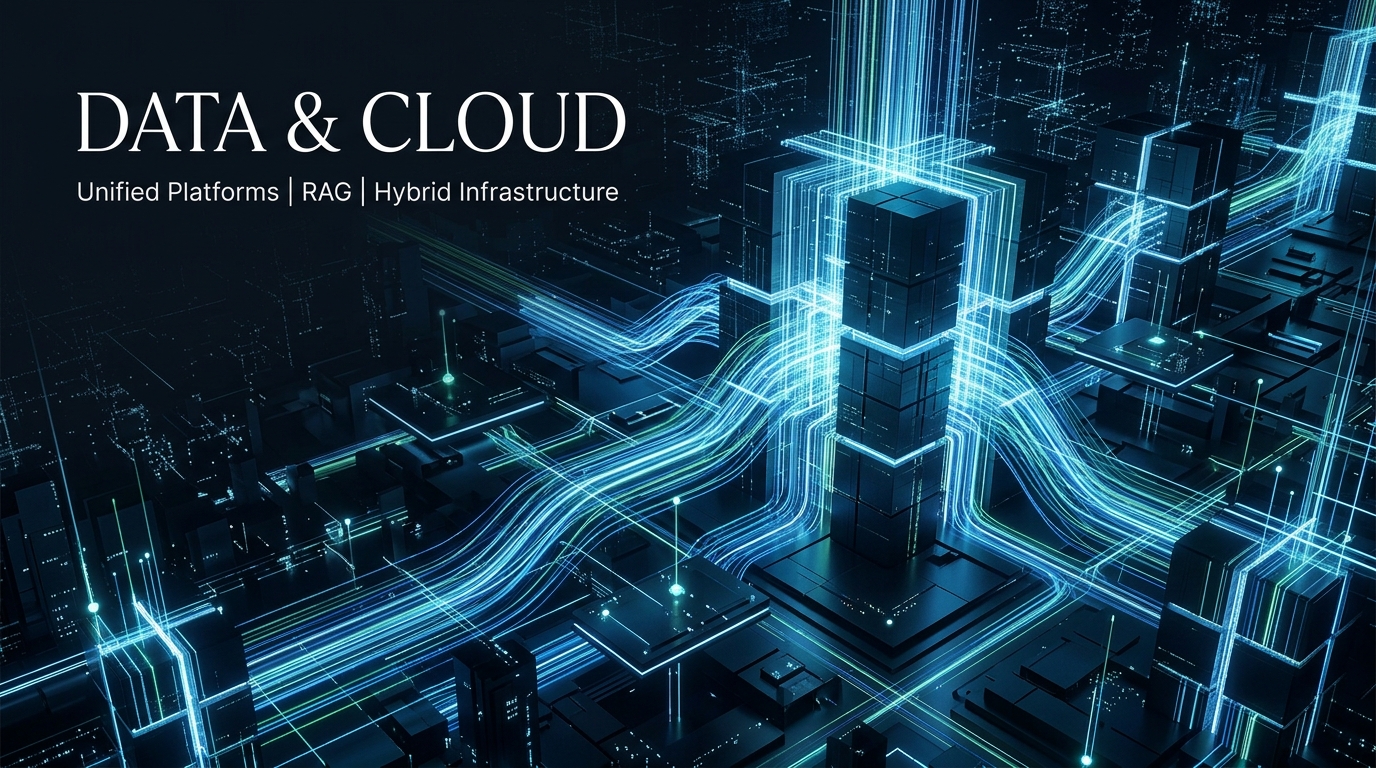
Data, Cloud & the AI-Ready Enterprise is a core content pillar at World AI Show Philippines 2027, taking place on 2-3 March 2027 in Manila. Chief Data Officers, CIOs and enterprise architects will share how they are building the foundations needed to run AI at scale.